Presentation
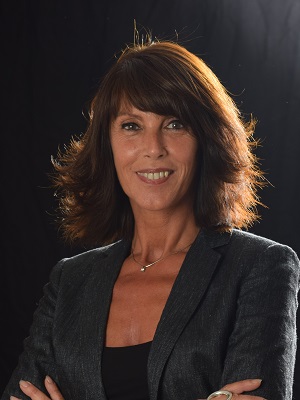
My name is Valérie Ennen. I am a Gestalt therapist (Belgian Institute of Gestalt Therapy) and family mediator (UCL). I am also trained in psychopathology at the IFTS, an approved member of the Belgian Gestalt Society and holder of the European Certificate of Psychotherapy (ECP).
Coming from a family of shopkeepers, I have always been immersed in a continuous human mix and, from where I stood, I learned very early to observe the world. I have always been fascinated by these “others”, at once so familiar, so similar, and yet so very particular and different.
It was first through a commercial position that I began to be in a helping and listening relationship. As manager of a Loss & Claim department, I was trained in listening and conflict management through Transactional Analysis and Nonviolent Communication in order to be able to welcome people who were victims of material loss, sometimes human loss, struggling with the feelings of anxiety and insecurity that this can generate.
This experience enabled me to acquire both a pragmatic mindset and a great capacity for empathy. I then devoted myself entirely to psychotherapy after 4 years of training in Gestalt therapy, 2 years in family mediation and 2 years in psychopathology.
My driving force, my credo, is the fundamental trust I have in each person’s ability to bounce back, to develop their own solutions, to seek and find what is good for them. Every human being naturally tends toward balance and will tirelessly seek to find it, restore it, and preserve it.
Therapy is certainly a matter of skills and, above all, of people, but also of common sense. When we end up seeking therapy, we must admit it’s because we can’t find our way out.
Yet it’s not for lack of having thought about this problem, this dead end, this knot, this blockage. We have a fairly good grasp of our problem, having turned it over in our mind a thousand ways. We generally know our deepest aspirations, but sometimes we momentarily can no longer manage to identify or connect with them.
It is by bringing this difficulty back into relationship, by addressing it to this other-therapist, that we can replay it, put it back into words, unfold it to look at it from a different angle and rediscover what makes sense for us.
Coming in for a consultation is not an easy step. Any prospect of change, even if it is desired, is a questioning of what we thought was self-evident, and this calling into question, even if it is necessary for our growth, can be a source of insecurity because to change is to accept losing what has sustained us up to now and to let go of our usual holds.
This requires establishing a relationship of trust and respect, but also and above all that there is a sufficient degree of safety in the therapeutic relationship to be able to venture into new ways of relating to oneself and to others. Everyone has an idea of what they mean and expect from therapy.
For some, it will be a life change, an upheaval, a bereavement, a loss, a relational difficulty. For others, it will be the desire to clarify their life project. It is also a space-time in which one can step out of social time in order to take a reflective look at oneself and listen to oneself think, a laboratory where one can “try oneself out,” “take safe risks,” to experiment with other ways of thinking and being, other ways of entering into relationship.
Why Gestalt in particular? Because it is an approach that aims to be resolutely human, taking into account the uniqueness of each person and therefore of each encounter. Because it places interaction at the heart of the work. Also because it offers support without forcing, which allows you to accept yourself where you are and to experience a new relational form that respects the natural rhythm of each person’s growth process.
Also because it is based on a position of trust in each person’s capacity for growth. And finally and above all, because it has a profoundly optimistic view of human beings as it considers that humans are not predetermined in advance, that they are shaped by their experiences and can therefore change the course of their lives through other reparative experiences.
As you will have understood, therapy is a matter of people, which is why I always recommend a first meeting to get to know each other and see how we can work together.
This presentation was translated by DocSelect.
Issues addressed
- Anxiety attacks
- Burnout
- Depression
- Grief
- Phobias
- Stress
- Trauma
- Anxiety
Specialties
- Gestalt therapist
- Individual